
INSTRUCTIONS FOR USE FOR GEBOLIQUID S:
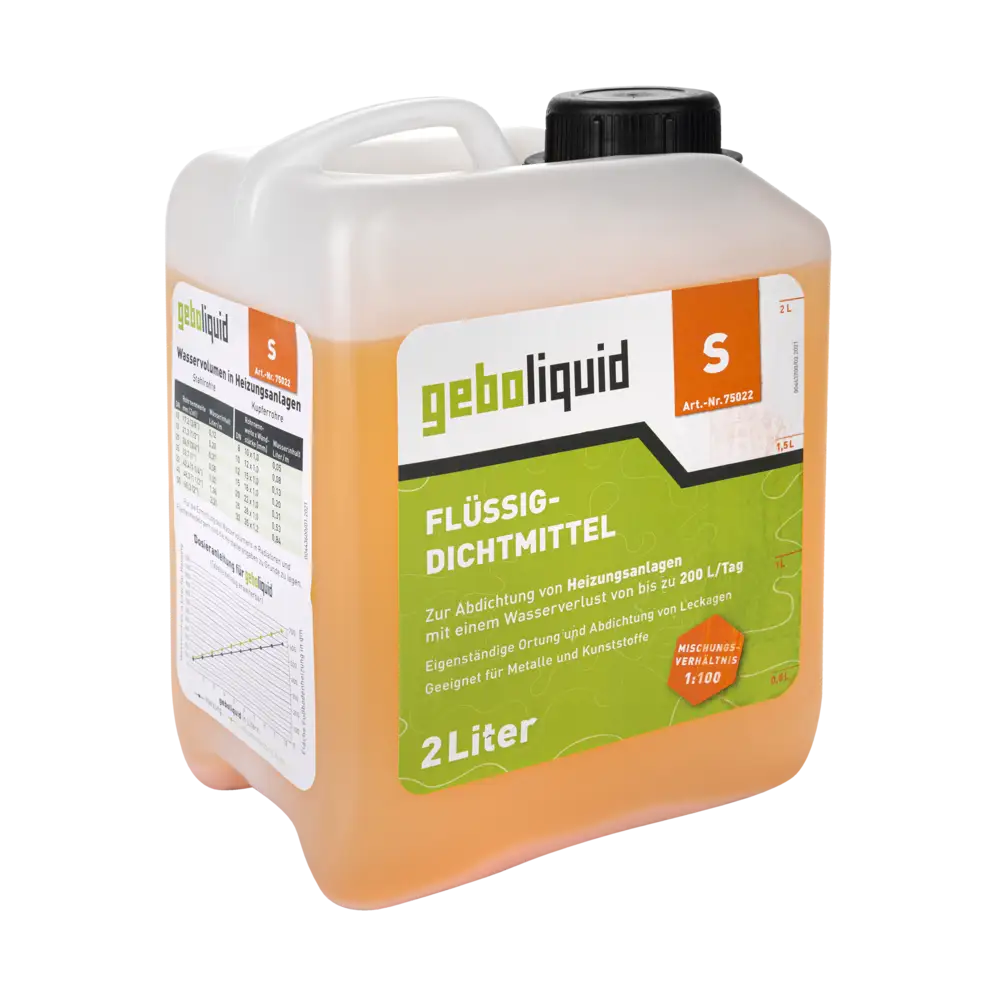
1. Determine the volume of water present in the heating system – see table „water volume in heating systems“.
2. Filters and strainers must be removed.
3. Bring heating system to operating temperature (60 °C). If the operating temperature of 60 °C is not achieved, the duration of the sealing process may extend accordingly (by several days).
4. Fully open all thermostatic valves. It is essential to make sure that the circulating pump operates continuously during the sealing process, because the sealant can only reach the damaged area by circulation.
5. Shake Gebo Liquid S well and add undiluted via the heating filling valve into the heating circuit (1 litre of sealant to 100 litres of water) – see „dosing instruction“.
6. Thoroughly vent circulating pumps and radiators.
7. Depending on the ambient humidity at the leak, the heating system can be placed back into normal operation after a minimum of 24 hours (reinstall filters and strainers).
8. In order to prevent undesirable crystallisation, all working equipment and objects, which have come into contact with the liquid sealants, must be rinsed thoroughly with water.
9. The sealant can remain in the system
INSTRUCTIONS FOR USE FOR GEBOLIQUID S:
1. Determine the volume of water present in the heating system – see table „water volume in heating systems“.
2. Filters and strainers must be removed.
3. Bring heating system to operating temperature (60 °C). If the operating temperature of 60 °C is not achieved, the duration of the sealing process may extend accordingly (by several days).
4. Fully open all thermostatic valves. It is essential to make sure that the circulating pump operates continuously during the sealing process, because the sealant can only reach the damaged area by circulation.
5. Shake Gebo Liquid S well and add undiluted via the heating filling valve into the heating circuit (1 litre of sealant to 100 litres of water) – see „dosing instruction“.
6. Thoroughly vent circulating pumps and radiators.
7. Depending on the ambient humidity at the leak, the heating system can be placed back into normal operation after a minimum of 24 hours (reinstall filters and strainers).
8. In order to prevent undesirable crystallisation, all working equipment and objects, which have come into contact with the liquid sealants, must be rinsed thoroughly with water.
9. The sealant can remain in the system
| Hierarchy type: | variant |
|---|---|
| Product type: | S |
| Series: | LID |
| Net weight: | 2,5 kg |
geboliquid
geboliquid - two-component sealant for heating systems
geboliquid is an innovative silicate sealant based on silicates, developed to quickly and permanently seal leakages in the water-bearing parts of heating systems from the inside - without any time-consuming dismantling or drying work. The geboliquid Micro, S, L and XL variants are each tailored to the amount of water leakage: from a maximum of 10 litres per day (Micro) up to 800 litres per day (XL). This means that the right solution can be found for almost any size of damage. The product range is supplemented by geboliquid Clean, a cleaning concentrate for removing lime, rust and sludge from the heating system, and geboliquid Protect, an anti-corrosion agent in accordance with VDI 2035. Both products are compatible with common materials such as steel, aluminium, copper and plastics and ensure reliable and permanent operation of the system.
geboliquid is the practical solution for skilled tradespeople who want to repair heating systems economically and protect them sustainably at the same time.
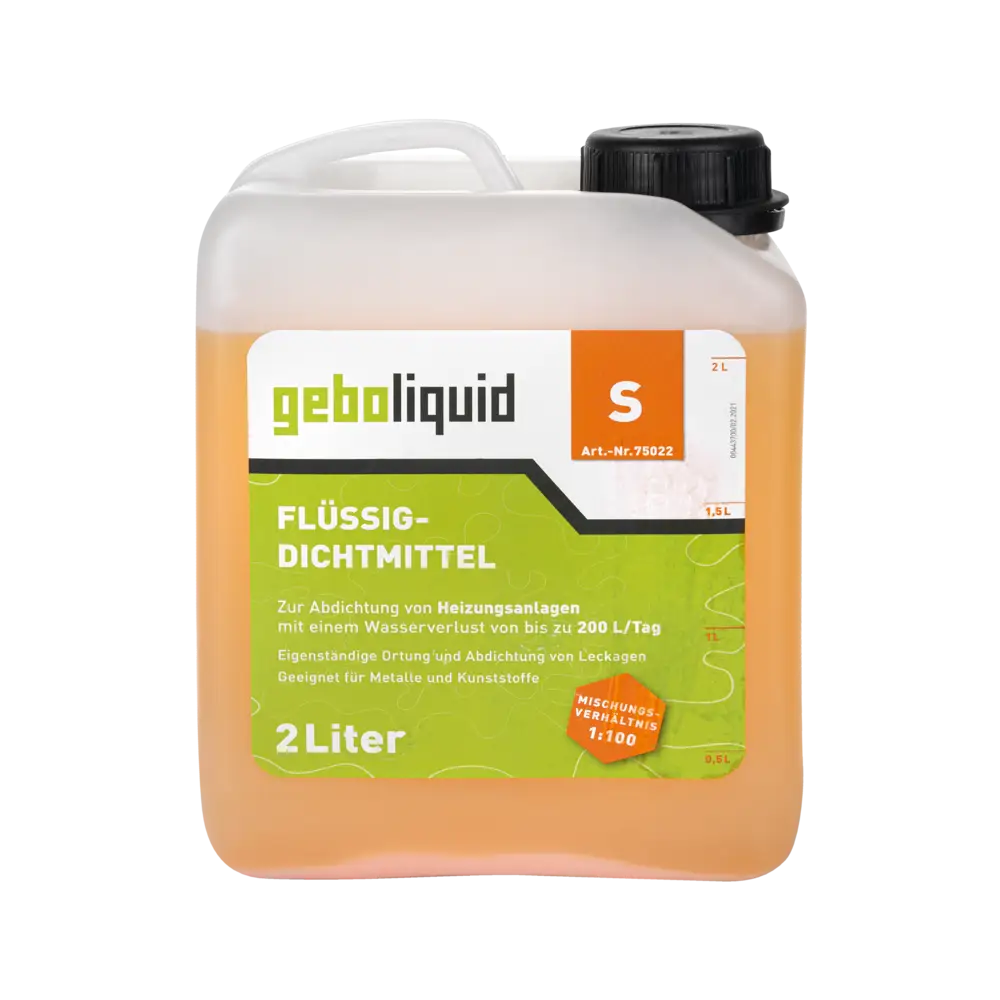
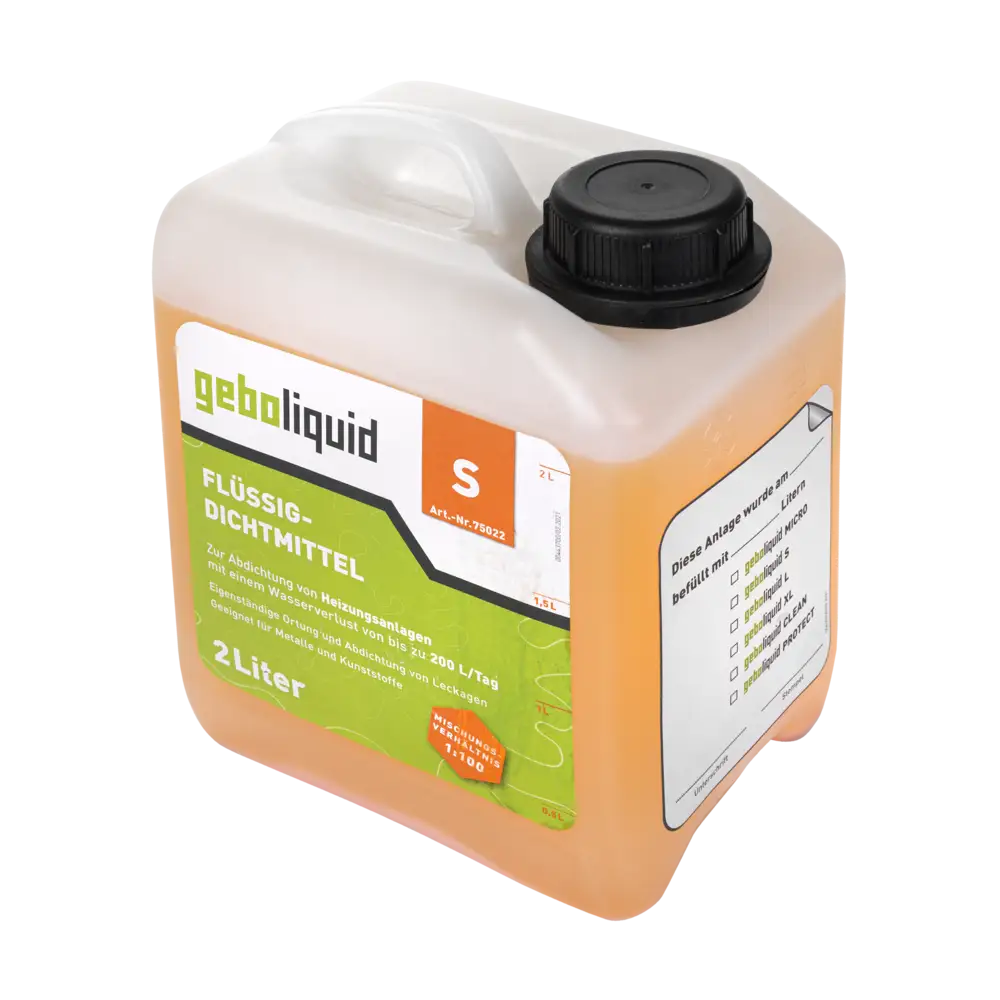
Product No.: 75022